The Dark Age: A Grimdark Epoch of the Wildlands

historical period
1220 MA-present
The Sages of the Storm Owl Feather, a covert assembly of the most powerful sages, discovered the dark alliance’s plans to infiltrate the Wildlands through multiple portals, known as Shadow Gates. Their aim was nothing less than total domination—an all-consuming conquest that would see the Wildlands’ population enslaved and its cities annihilated.
To counter this threat, the sages and the Council of Nations launched a preemptive campaign. On a remote island off the coast of Vüdos, they opened their own Shadow Gate into Mophedus, assembling an army of thousands to strike at the heart of this evil faction. The ensuing conflict, known as the 1219 Cross, raged for three years in the nightmarish depths of Mophedus. Though the Wildlanders managed to destroy the enemy’s portal segues and strike critical blows against their forces, the campaign ultimately ended in defeat.
The few survivors who returned to Eos brought harrowing tales of their experiences, describing Mophedus as a realm of unimaginable horrors. Worse still, they confirmed that the dark faction endured, its strength largely intact. The news shattered the spirit of the Wildlands, plunging its people into an age of gloom and fear that would linger for generations.
The Decline of Civilization
Following the 1219 Cross, the Wildlands underwent a catastrophic decline. Faith in the ancient gods faltered, replaced by primal paganism and darker spiritual practices. The economic systems that had once sustained the continent crumbled, and governance devolved into disarray. Famine, disease, and infighting became commonplace, while once-thriving nations like Hauth, Zor and Streng, have seen parts of their lands turn into shadow-filled worlds of crime, corruption and in some, even violent bloodshed.
Dark magic flourished in this chaotic environment, with primitive and shadowy arts—such as voodoo and blood sorcery—supplanting the structured disciplines of Astromancy and elemental magic. Factions like the Way of Chaos, driven by brutal and primal ideologies, rose to prominence, their influence spreading across the fractured Wildlands. Among these were the Fleshtribes of Malrunê, savage barbarians who embraced chaos as their guiding principle.
A Land Ravaged by War
The Dark Age was also a time of relentless conflict. Warbands like the Droogas, the Fleshtribes, and the Skel ravaged the land, aligning themselves with dark factions to terrorize the populace. These warbands wielded a savage mix of primitive and magical power, making them nearly unstoppable. The Skel, in particular, gained notoriety for their unholy alliances with the forces of Mophedus, striking fear into the hearts of all who encountered them.
Collective Sense of Doom and Gloom Across the Wildlands
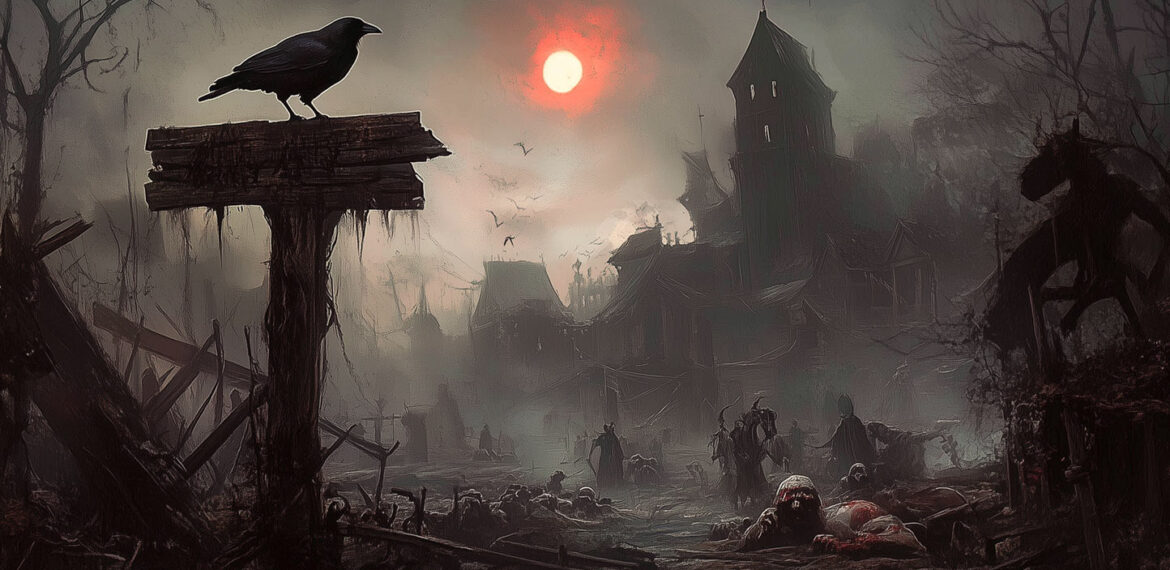
The Dark Age suffused the Wildlands with a relentless pall of despair. The air itself seemed heavier, laden with an almost tangible sense of dread. What began as the fallout of the 1219 Cross evolved into an unshakable malaise that consumed the hearts of even the most resilient. Farmers even abandoned their crops, fearing both the Harvest Cult, and curses from unseen forces. Merchants who once traveled freely across the land now refused to leave their crumbling cities, convinced that every shadow hid a lurking danger.
The decay spread like a plague, affecting every facet of life. In some areas, various towns that had once stood as vibrant examples of evolving civilization—like those in Adressmus, T’ssara, and Vüdos—all but fell into ruin. While some wealth remained, some of the great markets of previous generations, once bustling with trade and occupied by wealthy merchants, were now dens for beggars and thieves. Economic systems collapsed as trade routes became infested with bandits and warbands. Coin became almost meaningless in many regions, replaced by barter systems and sheer survivalism.
Society fractured under the weight of its despair. The council of nations, once a unified body dedicated to the prosperity of the Wildlands, dissolved into petty squabbles and mistrust. Alliances that had stood for centuries crumbled, leaving smaller settlements to fend for themselves. Some turned to ancient pagan rituals in hopes of appeasing unseen gods, while others embraced outright anarchy. Superstition ruled the day, and accusations of witchcraft often led to brutal executions.
Even the land itself seemed to mirror the collective despair. Once-fertile fields turned to ash, forests darkened with unnatural shadows, and rivers swelled with a sickly red hue after storms. The sun, though it still rose and set, seemed dimmer, casting a gray, lifeless light over the Wildlands. Travelers reported hearing eerie whispers carried by the wind, as though the land itself mourned its fate.
The Wildlanders’ spirits were further crushed by rumors of Mophedian creatures slipping through hidden portals, haunting isolated villages. Though sightings were rare, the mere possibility of such beings created an atmosphere of constant fear. Families huddled in their homes, unwilling to venture into the night. Fires were never extinguished, and walls were etched with protective wards, though few believed they would be enough.
Social Fragmentation
Communities that had once celebrated festivals and rituals together now splintered into isolated, mistrustful factions. Many forsook their old faiths, turning to primal cults or the dark allure of the Way of Chaos. Some sought guidance from Druids or Rangers who embraced the natural order, while others followed prophets promising salvation through blood sacrifices and arcane rituals.
The dissolution of faith in the ancient gods was perhaps the greatest tragedy. Temples stood abandoned, their once-sacred halls defiled by squatters or repurposed as hideouts for desperate scavengers. Clerics and priests, who had once unified the people with divine wisdom, were scattered or silenced by disbelief. Hope had become a fragile, fleeting thing, drowned by the overwhelming tide of gloom.
Wars of Magic: Ancient Forces Colliding with the Future
The Dark Age was not only a time of despair but also of conflict between the old and the new. Magic, an ever-present force in the Wildlands, became a battlefield in its own right as ancient primitive practices like Voodoo magic clashed with emerging disciplines, such as Astromancy.
Voodoo and Shadow Magic
Voodoo magic, with its roots in the primal energies of the Wildlands, thrived among those who had turned away from structured spirituality. Practiced by secretive covens and rogue druids, it harnessed the raw, untamed power of the land and its spirits. These rituals often involved bloodletting, effigies, and the manipulation of life essence. Some of its practitioners, such as Bone Weavers, were feared and revered, their power capable of cursing entire villages or raising the dead as twisted abominations.
Shadow magic, on the other hand, was born from the darkness of Mophedus. It drew upon the chaotic energy of the underworld, allowing its wielders to summon shadowy constructs, drain the life force of their enemies, or walk unseen between the planes. The Dark Veil, a secretive order of shadow mages, became infamous for their role in the chaos. They aligned with dark factions, spreading terror and destruction in their wake.
The Rise of Astromancy and Ariock Magic
Opposing these ancient magics were newer disciplines like Astromancy and Ariock magic, developed by the brightest minds of the New Birth era. Astromancy drew power from the celestial bodies, using intricate star charts and calculations to channel immense energy. It was a precise, almost scientific art, capable of conjuring devastating forces of energy & light or impenetrable starlight barriers. Practitioners of Astromancy, known as Starbinders, often served as advisors to rulers, believing their magic could guide the Wildlands back to order.
Ariock magic, on the other hand, was a fluid and dynamic art, harnessing the power of air currents and storms. Ariock mages, or Skyweavers, could summon tornadoes, ride gusts of wind, and even manipulate weather patterns. Their agility and adaptability made them formidable opponents, especially against the brute strength of voodoo warlocks and shadow mages.
The Great Mage Wars
As the Dark Age deepened, these competing schools of magic erupted into open conflict. Known as the Wars of Arcane Domination, these battles reshaped the landscape as much as they did the people.
In the northern reaches of the Wildlands, Starbinders clashed with Bone Weavers over the ruins of ancient arcane towers, their spells leaving the land scarred and barren. In the southern swamps, shadow mages of the Dark Veil waged a brutal campaign against Skyweavers, their battles darkening the skies for weeks. Villages caught in the crossfire were often obliterated, their inhabitants left to wander as refugees or succumb to the horrors of war.
These wars were not fought solely for survival but for control over the future of magic itself. The ancient practitioners sought to preserve their primal connection to the Wildlands, while the emerging schools aimed to impose order and progress. Yet, in the end, neither side truly triumphed. The wars only deepened the fractures within the Wildlands, leaving its people even more divided and vulnerable.
The Aftermath of the Mage Wars
By the present day, the scars of these magical conflicts remain etched into the Wildlands. Craters from celestial impacts, regions perpetually shrouded in darkness, and areas where the winds howl ceaselessly serve as grim reminders of the devastation.
Though both old and new magics persist, their practitioners are fewer and more secretive, wary of attracting attention in an era of suspicion and fear. For the people of the Wildlands, magic has become a double-edged sword—a force capable of both salvation and annihilation. Many whisper that the arcane energies unleashed during the wars have yet to settle and that the land itself bears the burden of their wrath.
Thus, the Dark Age continues, its legacy one of despair, decay, and an unending battle between the primal past and the uncertain future.
Beasts and the Wildlands
The worship and domestication of beasts became integral to survival and culture during the Dark Age. Predatory animals like dire wolves, lupecals, tyranoxes, and mastiffs were revered and trained for both war and companionship. Dire crows, fearsome aerial predators, were also tamed, serving as scouts and symbols of the era’s primal power. Beast worship became a defining aspect of daily life, with entire communities devoted to taming and honoring these creatures.
Dark Rituals and the Rise of Broodkin
Amid the chaos, dark rituals and sacrifices proliferated. Druids and rangers—keepers of ancient, primal traditions—rose to dominance, using their deep connection to the natural world to maintain order in the wilderness. Yet even among these figures of relative stability, shadowy practices emerged, reflecting the grim tenor of the age.
One particularly sinister development was the rise of the Broodkin, a race of dark sorcerers and shapeshifters who claimed Cronos as their protector. A powerful and enigmatic sorcerer, Cronos defended his kin with unmatched ferocity, earning him both reverence and fear among the Broodkin. Their influence spread like a plague, threatening to engulf even the more stable regions of the Wildlands.
Legacy of the Dark Age
The Dark Age left an indelible mark on the Wildlands. Its horrors reshaped not only the physical landscape but also the hearts and minds of its inhabitants. To this day, whispers of Mophedian incursions haunt the Wildlands, and rumors of dark factions amassing strength continue to circulate. The world remains steeped in decay, its future uncertain.
As the Vermillion Saga begins, the heroes are called to uncover the truth behind the lingering darkness. Are creatures from Mophedus infiltrating the Wildlands once more? And if so, can the brave few who dare to stand against them succeed where so many others have failed?