
Broodkin were a mysterios, esoteric race of dark-skinned humanoids who dwelled almost exclusively in the Blackwarg region of the Wildlands.
The Broodkin people were considered odd and enigmatic and were feared and shunned by many. Cast out from conventional society, they embraced a nomadic existence that defied all known customs and rules. Unlike other traveling peoples who sought to blend into the cultures they passed through, the broodkin rejected integration. Their very presence was a challenge to societal norms, embodying a mystique that set them apart, making them both feared and hated.
Description
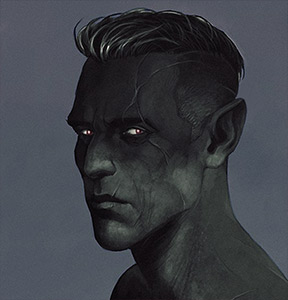
All Broodkin had coal-black skin contrasting starkly with their piercing violet, blue, or red eyes, which seem to glow with an inner light. Tall and lean, their thin yet muscular bodies exude an ethereal grace, moving with fluid precision. Their striking white hair cascades like moonlight against the night of their skin.
Known for their reclusive, gypsy-like nature, the broodkin dwelled in tent camps on the barren, blackened desert plains of the Blackwarg, and in forgotten ruins where they guarded their ancient secrets. Though they rarely would speak, their presence carried a quiet intensity, as if they were attuned to powers beyond mortal comprehension.
Broodkin were characterized by their dark, brooding temperament, which unsettled those who encountered them. There was an air of menace around them that felt deliberate; they spoke little to outsiders and when they did, their words were often veiled in cryptic meanings. They rarely displayed emotion publicly, further heightening their inscrutable nature. Their eyes, cold and piercing, seemed to gaze not at their surroundings but beyond them, as if they could see into realms others could not fathom. This demeanor fueled rumors of witchcraft, a practice the broodkin were believed to revere and actively cultivate.
medium
6'
humanoid
70-80 years
chaotic neutral, some are neutral evil
none
coal black
violet, blue, red
blackwarg, desert
black, grey, white
Among their people, witchcraft was not a taboo but a celebrated and integral part of life. They saw the arcane arts as a means of controlling their destiny, a secret power that allowed them to manipulate the physical world and those around them. They were known to be masters of deception, skilled in the art of illusion and trickery. Villagers often spoke of Broodkin enchantments that could lead a man to madness or drive a community to infighting and ruin. Their ability to deceive seemed almost supernatural, as if they could plant ideas into minds with mere suggestion, warping perception and bending reality to their will.
At the heart of their identity was the Broodkin belief in their secular origin, a notion that set them further apart from the rest of humanity. They did not see themselves as wanderers merely displaced by history or circumstance but as the origin species of the world. According to their ancient lore, the world was once theirs, and they ruled it in shadow long before the dawn of other civilizations. To the broodkin, every other race was an offshoot or a pale reflection of their primal essence. This belief shaped their interactions with outsiders, whom they regarded as lesser beings, beings who had forgotten their true nature. Thus, while they scorned the social constructs and rules of the societies they moved through, they also felt a deep sense of superiority over them.
This origin myth lent them an air of arrogance and untouchability. It justified their amorality, their disregard for the rules of other cultures, and their readiness to manipulate others for their own ends. Outsiders often described feeling trapped or toyed with after an encounter with the Broodkin. Whether through sleight of hand, charm, or dark rituals, they always seemed to gain the upper hand, leaving behind confusion and mistrust in their wake. Many communities grew to fear their presence, associating them with crop failures, strange diseases, and unexplained misfortunes that seemed to follow wherever they roamed.
In their rejection of societal norms, their dark sorcery, and their belief in their inherent superiority, the Broodkin lived as outcasts by choice. They wandered not as lost souls but as a race that claimed to predate all others, bound together by their shared esoteric beliefs, witchcraft, and a cold detachment from the world around them.