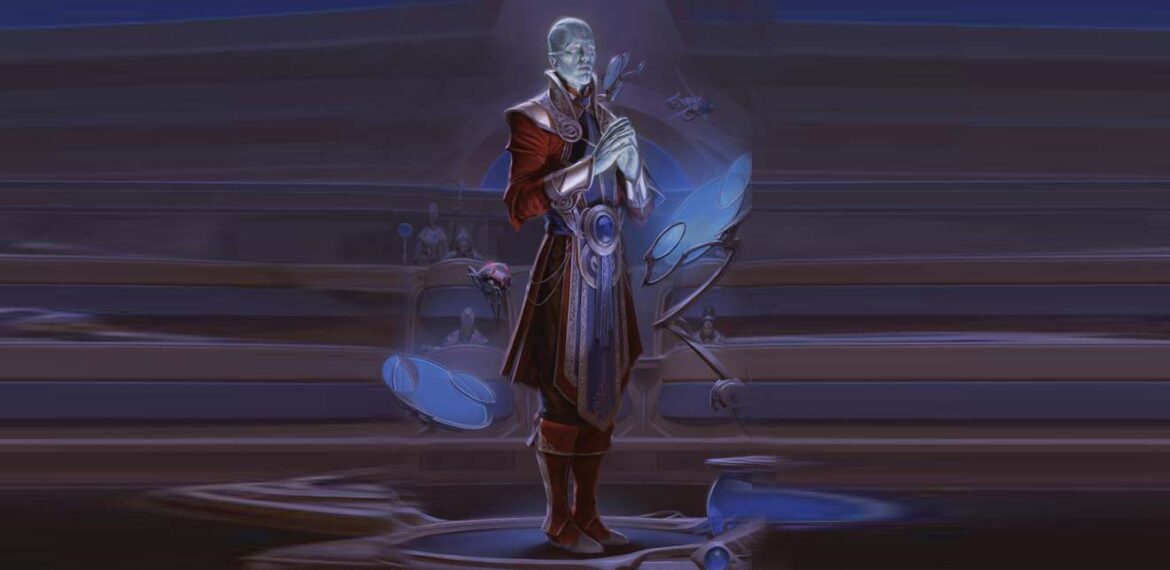
The Lunara were a subrace of humans that originated, along with the Lunara jurell, from the lands of Ardessmus. Lunara were not as common as the Alana or Nordisa, as they lived longer and tended to have fewer offspring.
Description
As a subrace, Lunara humans were usually tall and closely resembled the Alana both psychically and regarding their high intelligence, with some distinct differences. Lunara humans typically had pale grey skin and had either violet or silver eyes.
Ardessmus
Both Lunara humans and Lunara jurell were credited for founding the nation state of Ardessmus roughly around 115 AA. They also had built its capitol city, Echo Lake, which was widely considered the most beautiful and most sophisticated city in the Wildlands.
Echo Lake, the Astropagan Metropolis
Echo lake was a truly unique and a stunning mountain mecca and an awe-inspiring sight to see. The large city was built along the shoreline of the 1200 mile long mountain lake sharing its same name. The architectural design for many of its landmarks and main structures was designed in honor of Astropaganism and the study of Astromancy. This, quite literally, star-studded metropolis took centuries to construct and has remained an extraordinary accomplishment in both craftsmanship and celestial studies.

medium
6'
humanoid
90 years
any good
astropaganism
pale grey
violet, silver
white, grey or blonde
Astropaganism
Like the Lunara jurell, many Lunara humans were Astropaganists. Although technically pagan, they did not worship nature or beasts like the Nordisa, for example. They found their spirituality in the mystique of the heavens.
Most Lunara prided themselves on being scholarly, intelligent and wise. They were able to combine these abilities in ways that was unique to them. It is believed this led to the founding of Astromancy, a powerful school of magic that drew its source from the celestial bodies of the night sky.
Astromancy
Lunara humans played a vital role in the development of this school of magic. Astromancy emphasized the study of the actual celestial bodies above. The magic was able to draw its power and inspiration from the sun, moon, stars and celestial objects seen around the world of Eos. The magic was considered complex and it was widely misunderstood, particularly by non-magic users. They saw the magic as strange and otherwordly, a term that was also used to describe Lunara humans.
Alchemy
Lunara humans were also known as the masters of alchemy. Many mastered this skill and were able to concoct various elixirs that provided temporary abilities affecting both mind and body.
History
In the early epochs of Eosian civilization, the Lunara emerged in lush valleys beneath the towering mountains of Ardessmus. Their keen fascination with the night sky was apparent even in their ancient cultures. This fascination ultimately led to their ability to channel the radiant power of stars, planets, and comets, leading to profound early advancements in both culture and technology.
The Lunara humans, along with the Lunara jurell constructed elaborate cities, some that were devoted to the study of astronomy and the art of Astromancy. Cities like Luminaris and Starlight Haven were built with towering observatories and intricate spires that seemed to touch the heavens. Each building was aligned with specific celestial events, maximizing the absorption of cosmic energies. The streets were illuminated by crystals infused with light that lunara called “star power”, casting a serene glow that reflected the celestial motifs etched into their architecture.
The Lunara believed that celestial events not only influenced the physical world but also resonated with the fates of individuals. This belief system led to a rich tapestry of rituals and celebrations based on lunar cycles, planetary alignments, and stellar phenomena. They revered celestial deities, attributing to them the gift of Astromancy, and their religious practices emphasized the harmony between humanity and the cosmos.
The mastery of Astromancy allowed the Lunara to prosper. They cultivated abundant crops using cosmic energy, crafted advanced technologies, and built defenses against potential threats from rival tribes. Their influence spread across vast territories, establishing trade networks that exchanged not only goods but also knowledge and magical practices.
However, as their power grew, so did their ambition. During the late reign of the Ancient Exarchs, a faction within the Lunara sought to dominate the very stars themselves, leading to experiments that pushed the boundaries of Astromancy. This reckless pursuit sparked celestial anomalies that threatened their existence. A cataclysmic event, known as the Great Disjunction, temporarily corrupted a Grey Weave and caused the fabric of their magic to invert, plunging their cities into chaos and temporarily severing their connection to the celestial energies.
In the aftermath, the Lunara humans faced the consequences of their hubris. Some cities fell into ruin, and the surviving population turned inward, learning to live in harmony with the remnants of their once-great power. While Astromancy became damaged, its legacy endured, reminding the generations of the delicate balance between ambition and respect for the cosmos. A generation later, Astromancy would be be restored to its former state.