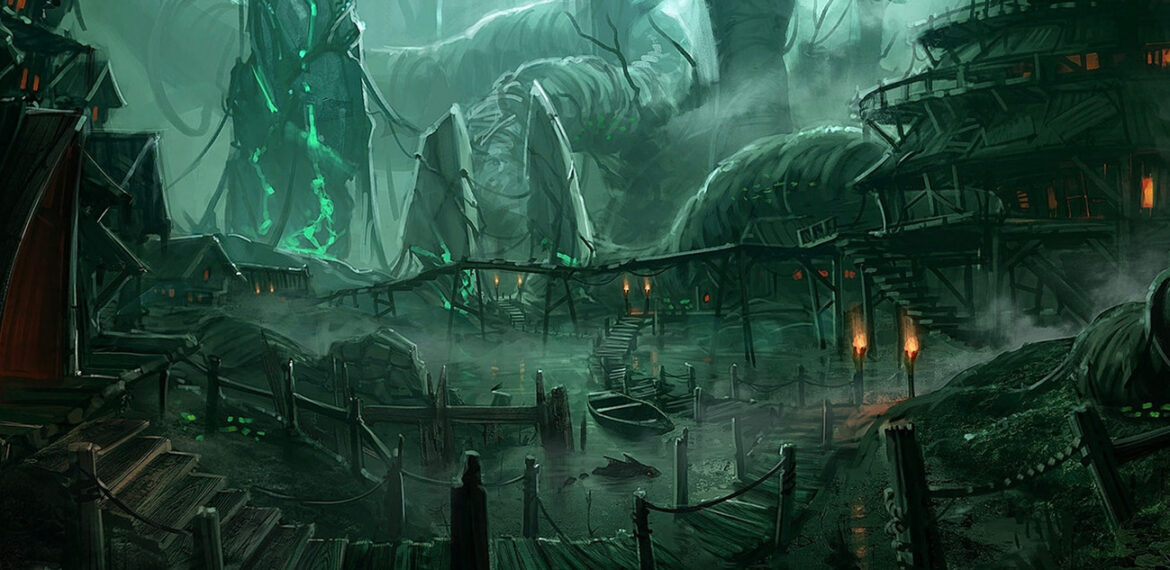
Located along the west coast of Acamiajem, Zülia Cay was a small village that was built within and along a ridge that formed a cay (small bay).
Its location was a very unlikely place to build a village. It was only possible because the water was shallow and contained many reef systems, which further calmed the already low tide of this area of the sea. The shallow inlet was surrounded by tall, sheer rock cliffs and within the reef-filled water of the cay grew several massive Cyperas mangrove trees. The village was built into and around these natural elements. The combination of the sheer cliffs and massive trees shrouded the entire cay in dim light and dancing shadows even at day time.
The structures in the coastal village were all floating just above the water’s surface and were secured by hundreds of wooden posts and wooden walkways. The cyperas tree roots here were so large, the ancient Awasa humans who originated here built structures upon these massive roots, as well as within the rocky cliff.
Tohou (toe-who) Stone
The Tohou was a huge natural rock that stood 122 ft. tall. It was located at the edge of the cay naturally embedded in the earth. This huge boulder had a large crack in its center and was partially hollowed out.

Zülia
Voodoo Cay
Streng
400
subtropical
awasa humans
village
none
Seen within the center of the stone were streams of thick molten substance, which glowed bright green. The liquid was harmless to creatures. It was never understood what produced the liquid, where it came from nor what it was for. The natural monument has made the cay notorious in this region of the continent. The stone, as well as the voodoo magic known to originate here has kept visitors away. It was said many travelers and adventurers who travelled to Zülia Cay were never heard from again.
Inhabitants
The village was occupied mostly by native Awasa islanders, and some of who were known to practice voodoo magic.
Notable Locations
Malanique’s
Malanique’s was a very small inn that was built into the corner of the southeast cliffside. This is where its few residents would go to blow off steam and hear the latest gossip. The proprietor, Malanique, was an aging Awasan who was born in the cay. Like all of the structures and dwellings in the cay, the inn was crudely constructed with planks of wood and pieces of tin and burlap.
The Waterhole
Located behind the Tohou stone was a natural stone depression that formed a large, natural pit, which contained fresh spring water. Along the edge of the pit was the entrance to a series of subterranean caverns known as Batokaran. These caverns descended down and into the stone bluffs that surrounded the cay. Dangerous aquatic creatures were known to reside in Batokaran and a large metal gate was erected over the entrance to prevent these creatures from reaching the village.
Batokoran
Little was known about Batokoran by those who did not live in the cay. It had been said to be a gateway to Mophedus, although, most believed this is fantasy. Rumors have also been spread about those entering Botokoran who were never heard from again. What is known is that the cavern entrance to the subterranean area is marked by fern bushes and unusual gloomross that glowed a deep red color rather than its known blue or gold hue.
Shrine of Okra
This ancient stone shrine was located high above the village on a natural rocky ledge. It was accessed by a series of rope bridges, each bridge stretching from one side of the cliff wall to another, ascending higher than the one before it.
Werecorw lycans believed the temple held the spiritual presence of Okru, beast (pagan) god of the Werecrow lycans.
Voodoo Shamans
Many of the inhabitants of Zülia Cay were known to practice voodoo magic, and some were shaman and shamaness and they controlled the cay. The cay had a reputation as a dark, mysterious, even dangerous place where many have visited, and some had vanished. These shaman rarely socialized with others in the village and some lived in shanties and were considered hermits.