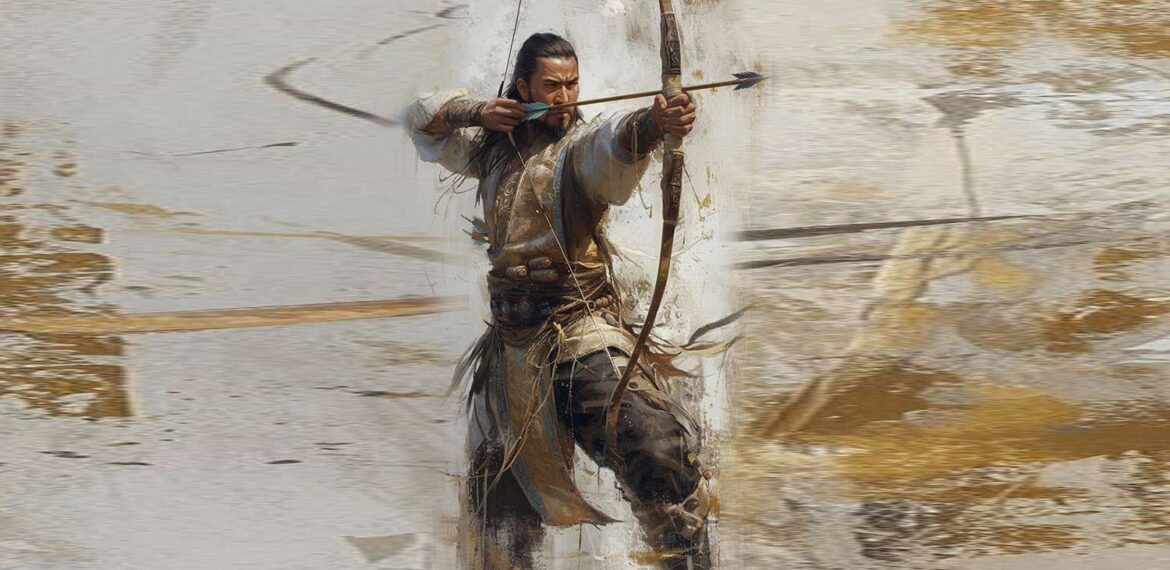
The Awasa humans, a distinct subrace of humanity, once thrived in the subtropical expanse of Streng, a wild and untamed region in the heart of the Wildlands. Renowned for their connection to land and sea, the Awasa embodied a harmony with nature that shaped their culture, beliefs, and survival.
Physical Traits and Connection to the Wildlands
The Awasa bore dark beige to mocha-toned skin that shimmered like sunlit sand, complemented by hair as dark as the shadows of the deep forest. Their lean, muscular frames were honed by years of laborious seafaring, hunting, and combat. This subrace of humans was deeply attuned to the rhythms of their homeland, its salty winds and verdant shores shaping their resilience and vitality.
Masters of the Sea and Stewards of the Strait
For centuries, the Awasa claimed dominion over the T’ssara Strait, a critical maritime passage that bridged the Wildlands’ vast seas. Their seafaring expertise rivaled that of the Anaqua, their neighbors and occasional adversaries. Awasa-built ships, crafted from sacred trees of the Streng forests, were revered for their elegance and strength. These vessels patrolled the strait tirelessly, protecting it from pirates, invaders, and other maritime threats. The strait was more than a channel of trade; it was the lifeblood of the region, and the Awasa were its watchful guardians.
A Legacy of Conflict with the Anaqua
While the Awasa and Anaqua peoples shared an enduring respect for the seas, their proximity often bred contention. Border disputes over water and land escalated into skirmishes across the rugged frontier known as the Borderlands. The Awasa, fiercely independent and protective of their cultural purity, resisted attempts by neighboring nations to infringe upon their sovereignty. These conflicts, though rarely erupting into full-scale wars, forged a simmering rivalry that lingered for generations.

medium
5'9"
humanoid (human)
80-90 years
mostly good
varies
dark beige, mocha
brown, hazel, green
brown, black
subtropical, marsh
The Awasa and the Dark Art of Voodoo
The Awasa were credited as the progenitors of Voodoo magic, a mysterious and primal branch of arcana deeply rooted in the untamed forces of nature and the spirits of the Wildlands. Known as the Circle of Voodoo, practitioners harnessed energies that others deemed dark or crude, channeling the spirits of land, sea, and storm to weave their spells. This form of magic, while feared and misunderstood by outsiders, was an integral part of Awasa life. Many Awasa saw Voodoo as a sacred connection to their ancestors and the gods of the Wildlands. Yet, it also cast a shadow on their reputation; neighboring nations like Ardessums and Zor sought to outlaw its practice, viewing it as dangerous and unholy. Attempts to suppress the magic were met with resistance, and even those who merely practiced Voodoo rituals were often imprisoned or exiled. Despite its controversial nature, Voodoo spread beyond Streng, taking root in Acamiajem, southern Vüdos, and the islands of the Anaqua Empire, where druids of the Circle continued to thrive.
Homelands and Migration
Streng was the ancestral cradle of the Awasa, their connection to its jungles and shores unbreakable. However, as their seafaring prowess grew, so too did their reach. The Awasa established settlements across southern Vüdos, the Acamiajem peninsula, and scattered isles dotting the region. Their migrations left behind remnants of their civilization—stone ruins, ancient temples, and weathered statues dedicated to forgotten gods of sea and storm.
The First Settlers of Streng
The Awasa were among the first intelligent humanoids to claim the subtropical peninsula of Streng. In the annals of the Ex Arcanotis, the sages chronicled their early presence, describing their dark skin and their association with the enigmatic ruins of Acamiajem. These ruins, adorned with carvings of sea creatures and celestial symbols, hinted at an advanced culture that revered the forces of nature. During the late period of Epoch II Origins, the Awasa began constructing villages and temples dedicated to their pagan deities. As time passed, these shrines were repurposed to honor the Ancient Exarchs, whose empire rose and fell along the coastlines of Acamiajem. The Awasa left their mark not only in their homeland but also in the neighboring territories, carrying their traditions and conflicts to the islands and into the heart of the Anaqua Empire.
A Culture Both Revered and Feared
To those who knew them, the Awasa were a paradox: a people deeply spiritual yet fiercely independent; guardians of the Wildlands, yet practitioners of magic that others deemed heretical. Their mastery of the seas and their devotion to Voodoo set them apart, earning them both admiration and suspicion. While their neighbors might have branded them as primal or dangerous, the Awasa viewed themselves as the stewards of Streng—a land and sea they vowed to protect, no matter the cost.