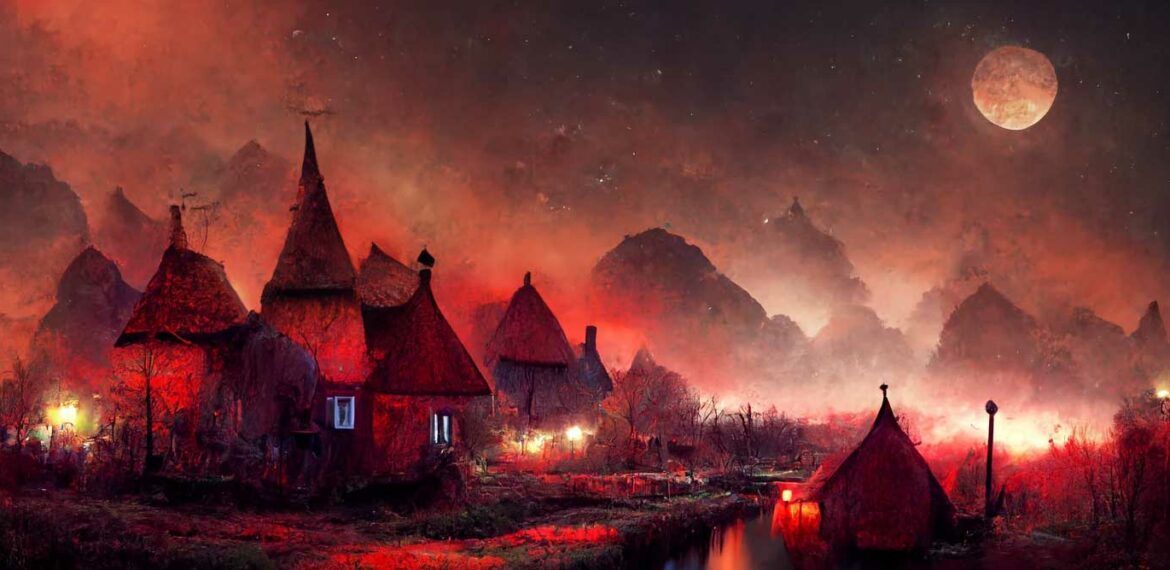
Naaks East lay in the harsh grip of the molten rivers that snaked their way from Morgrun’s Mantle, a nearby village forever scorched by the heat that seeped from the lava flows less than a mile away. Day and night, the air in Naaks East was thick with ash and the stinging scent of sulfur, pressing down on its inhabitants like an unseen hand. The ground itself seemed to pulse with warmth, and there was no escaping the unbearable heat—even the stone buildings radiated a feverish warmth that clung to the skin and dried the throat. In this oppressive climate, metal warped and flesh blistered, and only the hardiest souls could endure long without succumbing to the slow, relentless burn of life in Naaks East.
In this infernal village, a faint semblance of life flickered in the form of black markets and grim, bustling trade. Stalls and shanties sprang up in the narrow alleys, offering wares that couldn’t be found anywhere else—strange, exotic foods that required careful handling to avoid poisoning, potions brewed from ingredients scraped off the lava’s edge, and artifacts that glowed with faint, forbidden magic. Traders came and went like ghosts, faces hidden by scarves or hooded cloaks to protect themselves from the burning air, their eyes always scanning for danger in a place where trust was as rare as water.
Naaks East was also a magnet for mercenaries, bounty hunters, and soldiers of fortune drawn by the region’s eternal conflict. The Civil War’s chaos had created a lucrative market for those willing to get their hands bloody, and there was no shortage of employers here who would pay well for an enemy’s severed head or a rival’s ruin. The few inns and taverns that dared to operate in Naaks East were dingy, shadowy places, their walls lined with pitted metal and reinforced stone to protect against stray arrows or desperate, drunken brawls. The taverns were dark, smoky havens where the scent of burnt flesh and spoiled ale mingled, offering the barest relief from the scorching streets outside. Patrons rarely spoke above a murmur, their conversations guarded, their eyes darting about, ever wary of a knife in the back.

Naaks East
"the oven"
Hauth
500
dry
fyreburhl, humans
none
unknown
Despite the omnipresent danger, a strange form of order did persist here. Local merchants, their own fortunes tied to the tenuous stability of Naaks East, employed ruthless mercenaries to impose a kind of brutal, streetwise justice. These hired enforcers could be seen prowling the main alleys, weapons at the ready, their faces as unforgiving as the lava’s heat. Any who disturbed the fragile peace too recklessly were dealt with swiftly, their bodies often left as grim reminders that Naaks East tolerated chaos—but only to a point.
There were rumors, whispered in cautious tones, that Naaks East was built on cursed ground, that the very stones of the village held a malevolent spirit, hungry for souls. Some swore that, in the dead of night, they’d seen specters walking the alleys, drawn from the depths of the lava itself—lost souls, bound to the village by dark magic, flickering like embers in the suffocating heat. And so, the people of Naaks East lived on, trapped between the scalding river of fire and the perilous trade that sustained them, a people as scarred and twisted as the land itself, each day spent inching closer to madness and death.
Natural Spring
It was believed that the reason any humanoids could survive in Naaks East was in-part due to a large natural water spring that also existed in the village, providing its inhabitants with an abundance of fresh, cold water.